

Blog
The 7 Chakras and Their Crystals: A Simple Guide

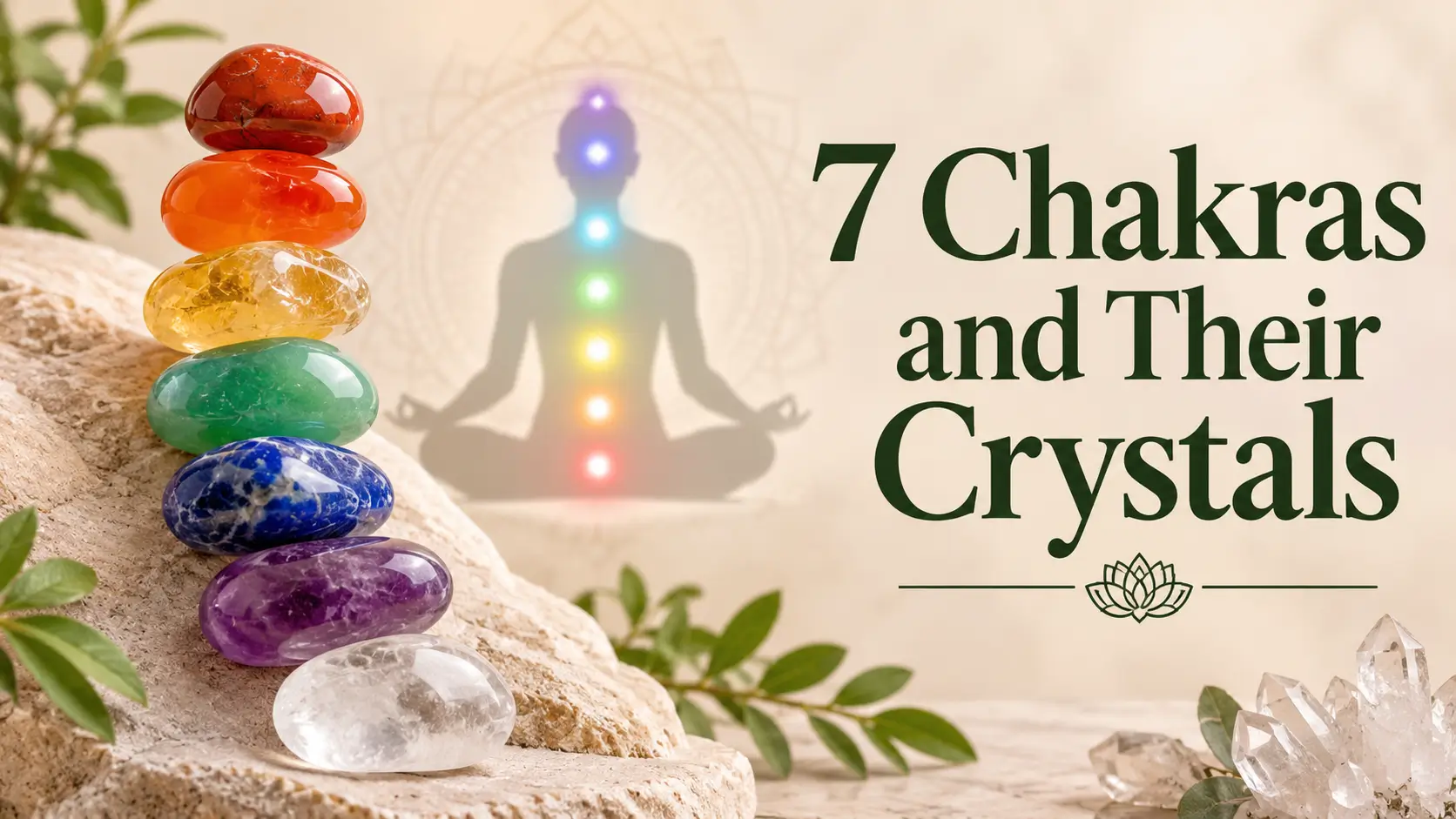
The 7 chakras are energy centres in the yoga tradition, set along the spine from its base to the crown of the head. Each one carries a colour, a place on the body and a set of crystals.
This guide walks the seven in order, root to crown, with each name, colour and the crystals people use for it. Then it gives a simple 10-minute way to use one stone.
What is a chakra?
Chakra is a Sanskrit word that means wheel or disc. In the yoga and tantric traditions, the chakras are points where the subtle channels of the body meet, set along the spine. They belong to the subtle body, a system used in meditation. They do not match any structure an anatomist can find.
The seven-chakra map runs from the base of the spine to the crown of the head. Each chakra has a Sanskrit name, a colour, a place on the body, an element and a seed sound. The older texts describe each one as a lotus with a set number of petals.
One honest note before the map: the chakra system is old, and it comes from Indian yogic and tantric tradition. The rainbow colours and the crystal pairings are newer. They come from 20th-century Western crystal work. This guide uses the modern map, because it is the one every shop and teacher uses today, and it says so plainly.
1. Root chakra (Muladhara)
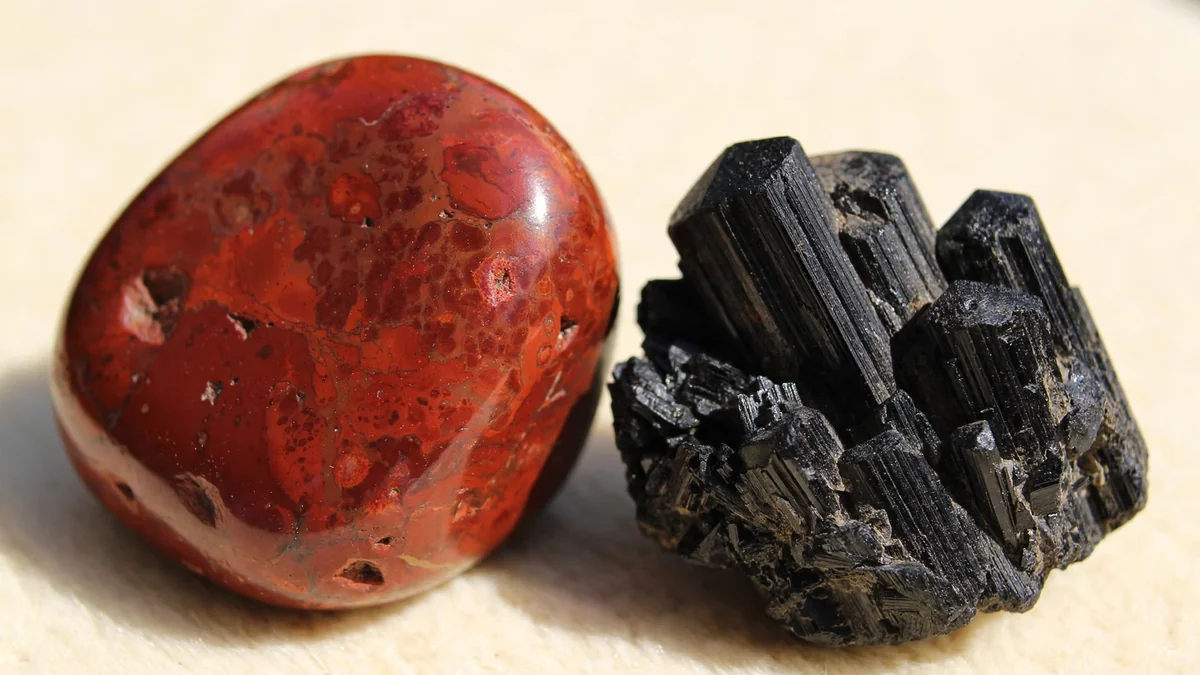
Muladhara means root support. It sits at the base of the spine, and its colour is red. Its element is earth, its seed sound is LAM, and the old texts give it four petals. Tradition links it with safety, stability and the feeling of the ground under you.
The stones are red and black, the colours of earth and of the ground itself. Red jasper is the classic root stone, an opaque brick red. Black tourmaline is the grounding and protective stone of the set. Hematite, smoky quartz and garnet round it out.
Use one stone at a time. Hold it in your left hand for 5 to 10 minutes, or rest it at the base of your spine while you lie down. Wear it as a bracelet on days when you want steadiness.
2. Sacral chakra (Svadhisthana)
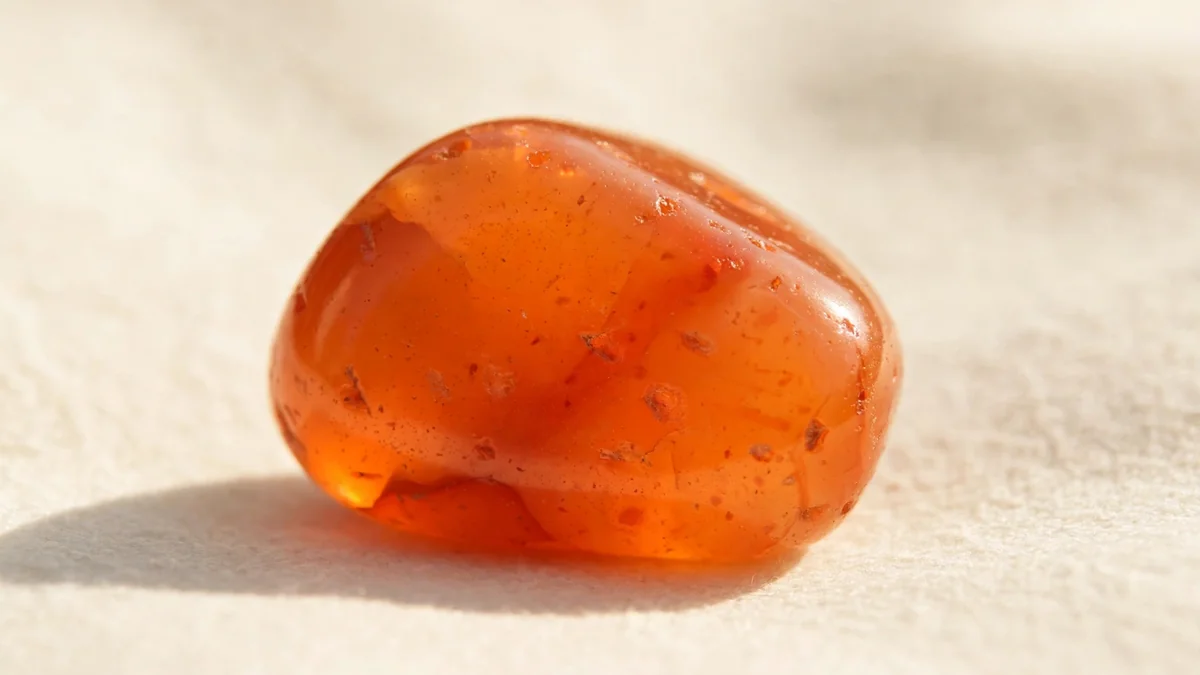
Svadhisthana means one’s own abode. It sits in the lower belly, below the navel, and its colour is orange. Its element is water, its seed sound is VAM, and the old texts give it six petals. Tradition links it with creativity, pleasure, emotion and flow.
Carnelian is the stone to start with: a warm orange chalcedony that crystal practice links with creative drive and vitality. Orange calcite is softer and suits emotional release. Sunstone brings warmth and joy. Moonstone is the exception to the colour rule here. It is white or peach, and it still belongs to the sacral chakra in most charts.
Wear carnelian as a bracelet, or carry the stone in a pocket on days when you want to make something.
3. Solar plexus chakra (Manipura)
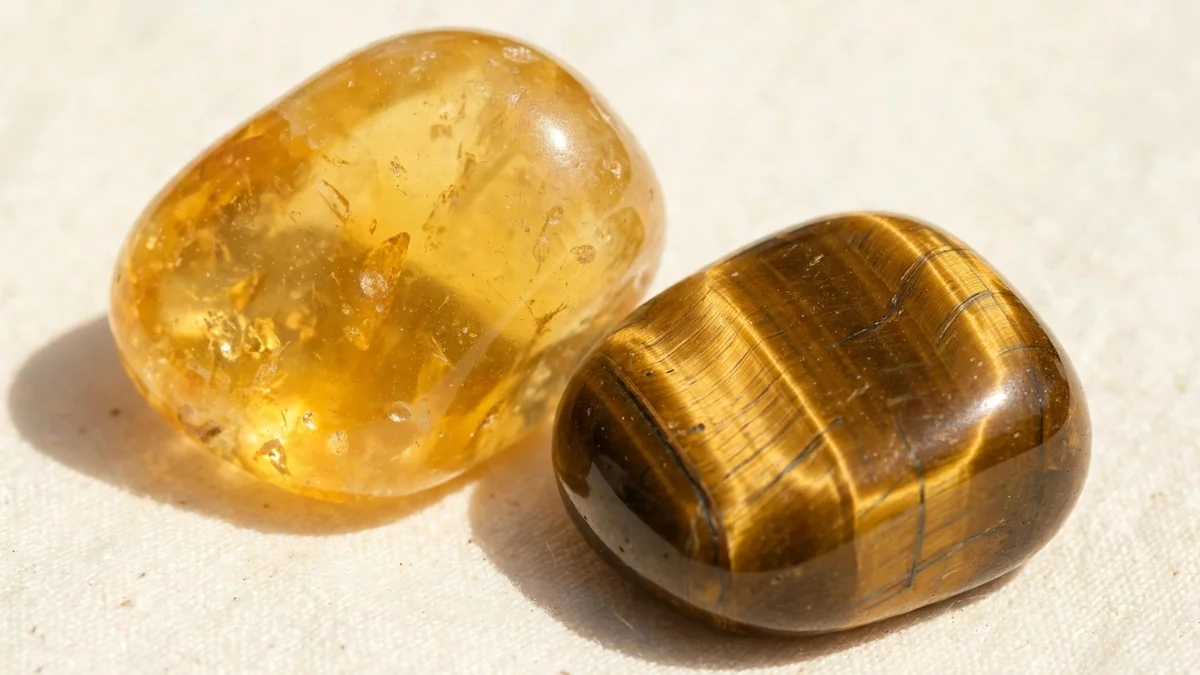
Manipura means city of jewels. It sits in the upper belly, below the ribs, and its colour is yellow. Its element is fire, its seed sound is RAM, and the old texts give it ten petals. Tradition links it with confidence, willpower and personal power.
Citrine is the stone most people reach for here: a bright yellow quartz that crystal practice links with clarity and confidence. Tiger’s eye is the second choice, warm brown-gold, used for focus and follow-through. Pyrite and yellow jasper are the other common picks.
Wear citrine or tiger’s eye as a bracelet before a talk, a test or a hard conversation. Hold the stone for a minute and set one clear intention before you start.
4. Heart chakra (Anahata)
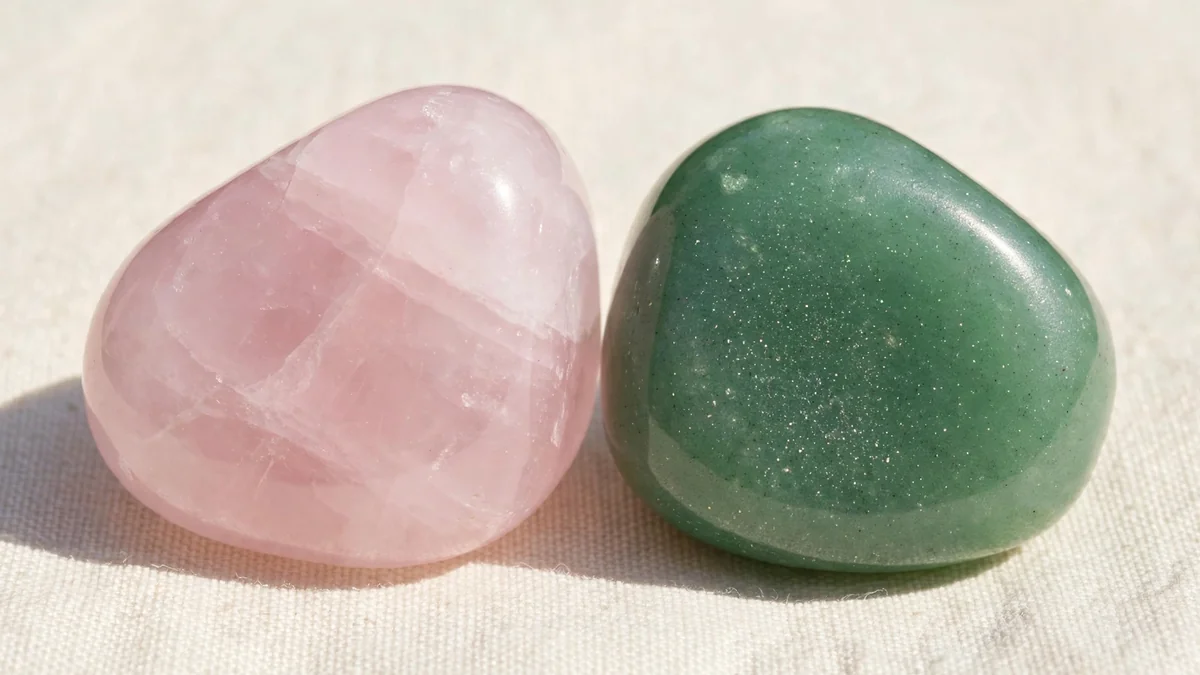
Anahata means unstruck, a sound that comes from nothing striking anything. It sits at the centre of the chest, and its colour is green, with pink as the second colour. Its element is air, its seed sound is YAM, and the old texts give it twelve petals. Tradition links it with love, compassion and forgiveness, given and received.
Rose quartz is the stone most people know for the heart: a soft pink quartz. Green aventurine is the green choice, and rhodonite and jade are the other common picks. Green and pink stones both belong here, so pick the one you like looking at.
Rest the stone on your chest for 5 to 10 minutes while you breathe slowly, or wear it as a pendant over the heart.
5. Throat chakra (Vishuddha)
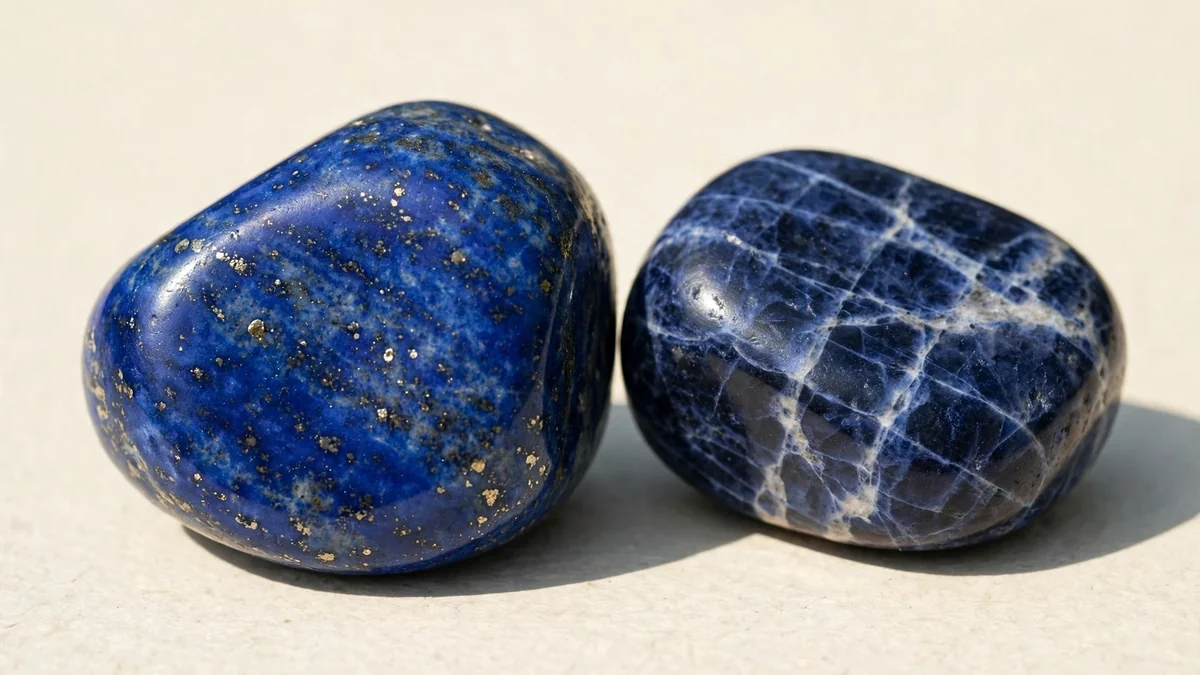
Vishuddha means especially pure. It sits at the throat, and its colour is blue. Its element is space, its seed sound is HAM, and the old texts give it sixteen petals. Tradition links it with honest speech, listening and self-expression.
Lapis lazuli is the stone most people reach for here: a deep blue stone with gold flecks. Sodalite is the calmer second choice, and aquamarine and blue lace agate are the other common picks. Blue stones suit the throat because the chakra’s colour is blue.
Wear lapis lazuli as a necklace or a pendant, so the stone sits near the throat. Hold it before a talk when you want your words to come out clear.
6. Third eye chakra (Ajna)
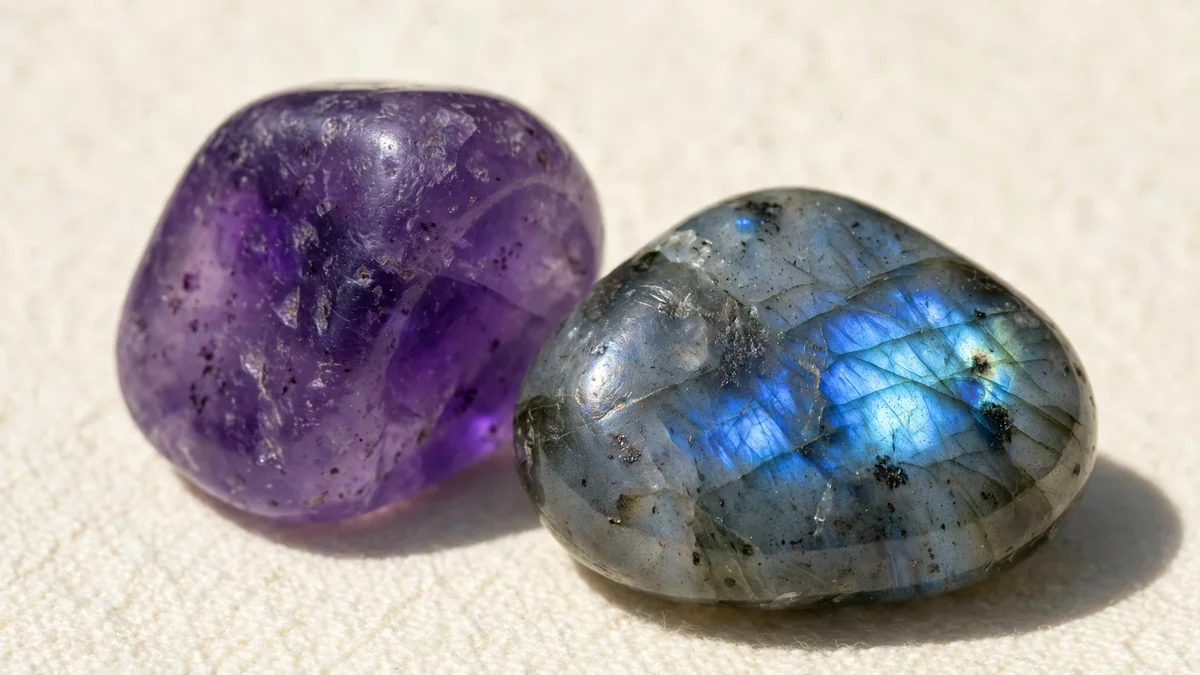
Ajna means command, or to perceive. It sits between the eyebrows, and its colour is indigo. Its seed sound is OM, and the old texts give it two petals. Tradition links it with intuition, insight and inner vision.
Amethyst is the stone most people reach for here: a purple quartz that crystal practice links with calm and clear thought. Lapis lazuli crosses over from the throat chakra, and labradorite and fluorite are the other common picks. Sodalite also appears in some charts.
Rest amethyst on your forehead for a few minutes during meditation, or keep a piece on your desk while you think. Short sessions work best here, 5 to 10 minutes.
7. Crown chakra (Sahasrara)
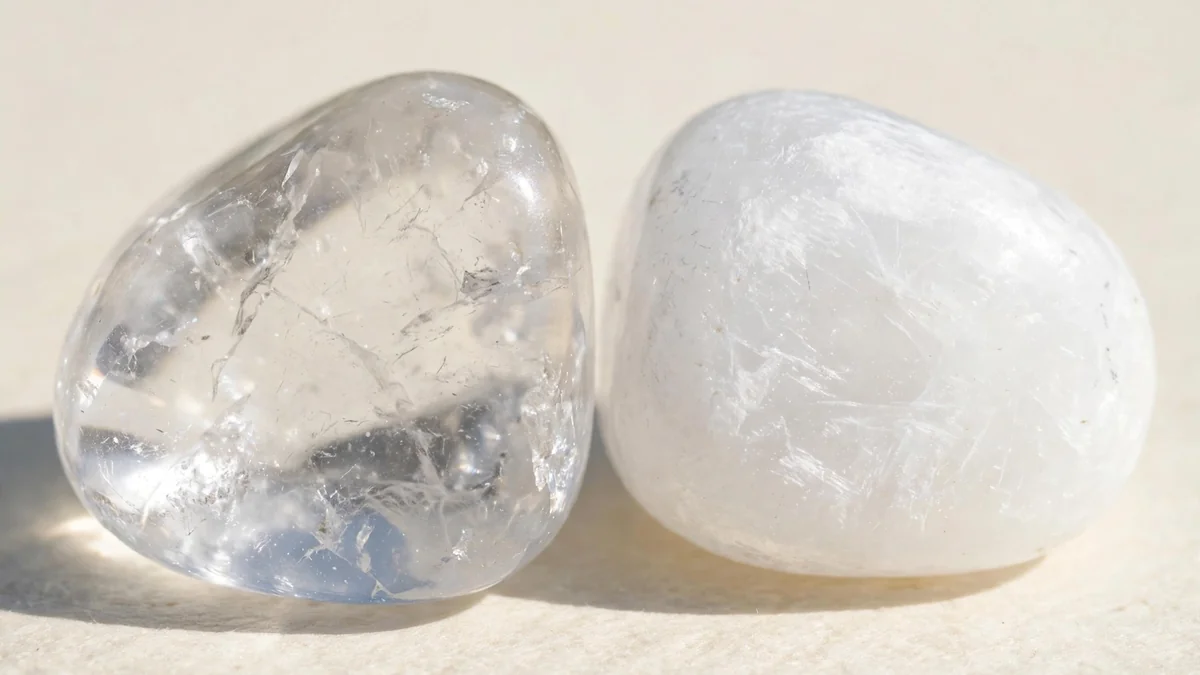
Sahasrara means thousand-petalled. It sits at the top of the head, and its colour is violet or white. The old texts give it a thousand petals. Tradition links it with awareness and spiritual connection.
Clear quartz is the stone most people reach for here, and it is also the stone crystal practice uses to charge other stones. Amethyst crosses over from the third eye, and selenite and howlite are the other common picks. White and clear stones suit the crown because its colours are violet and white.
Rest clear quartz above your head for a few minutes during meditation, or keep selenite on your bedside table. Keep the practice short and quiet.
How to use chakra crystals
Start with one chakra. Pick the one that matches what you want to work on, and use one or two stones for it. Seven stones at once scatter your focus.
- Cleanse the stone. Rinse it under running water, pass it through sage smoke, or leave it in moonlight overnight. Skip water for selenite and hematite, which water can damage.
- Set an intention. Hold the stone and say one clear sentence about what you want from the session.
- Place the stone. Lie down and rest it on the chakra point, or hold it in your left hand. Meditate for 10 minutes, breathing slowly and keeping your attention on the stone.
- Wear it or carry it. A bracelet or a pocket stone keeps the focus through the day. LEMRA’s Crystal Bracelet Guide covers which wrist suits each stone.
- Cleanse it again. Once a month is the common rhythm, or after a hard week. LEMRA’s guide on how to cleanse and charge crystals at home gives the full steps.
Chakra stones at LEMRA
LEMRA stocks the stones in this guide as bracelets, tumbled stones and raw pieces: amethyst, carnelian, citrine, tiger’s eye, rose quartz, green aventurine, lapis lazuli, sodalite, hematite, black tourmaline, selenite, moonstone, labradorite and clear quartz. The Top 10 Powerful Crystals guide gives the Mohs hardness and the traditional chakra for each of its ten stones.
You can see the stones in the Budapest shop at Parizsi utca 6a, or order from the online shop. Every piece is natural stone, labelled honestly, including treated stones. If you are starting out, LEMRA’s guide to the top healing crystals for beginners is the place to begin.
FAQs
What are the 7 chakras in order?
Root, sacral, solar plexus, heart, throat, third eye and crown. They run from the base of the spine to the crown of the head, in that order.
Which crystal goes with each chakra?
Root: red jasper, black tourmaline, hematite. Sacral: carnelian, orange calcite. Solar plexus: citrine, tiger’s eye. Heart: rose quartz, green aventurine. Throat: lapis lazuli, sodalite. Third eye: amethyst, labradorite. Crown: clear quartz, selenite.
How do I use chakra crystals?
Pick one chakra, cleanse the stone, set one clear intention, then place the stone on the chakra point or hold it for 10 minutes. Wear it or carry it after the session.
Can I wear all 7 chakra crystals at once?
You can. Beginners do better with one or two stones. Seven stones at once scatter your focus, so a 7-chakra bracelet is the common way to wear the full set.
Are chakras real?
The chakras come from Indian yogic and tantric tradition and belong to the subtle body, a system used in meditation. They do not match any structure anatomy can find, and crystal effects have no scientific proof. Use the practice as a focus tool. It does not treat or cure any condition.
How do I cleanse chakra stones?
Moonlight overnight, running water, or sage smoke. Skip water for selenite and hematite. Once a month is the common rhythm.