

Blog
How to Cleanse and Charge Crystals at Home: Safe and Simple Methods


Cleansing and charging crystals at home can be simple. Moonlight, sound, smoke, intention, and careful use of water are some of the most common methods.
The safest method depends on the crystal. Some stones tolerate water well, while minerals such as selenite can be damaged by moisture. Strong sunlight may also fade stones such as amethyst and rose quartz over time.
If you are unsure what type of crystal you have, start with a dry method such as moonlight or sound.
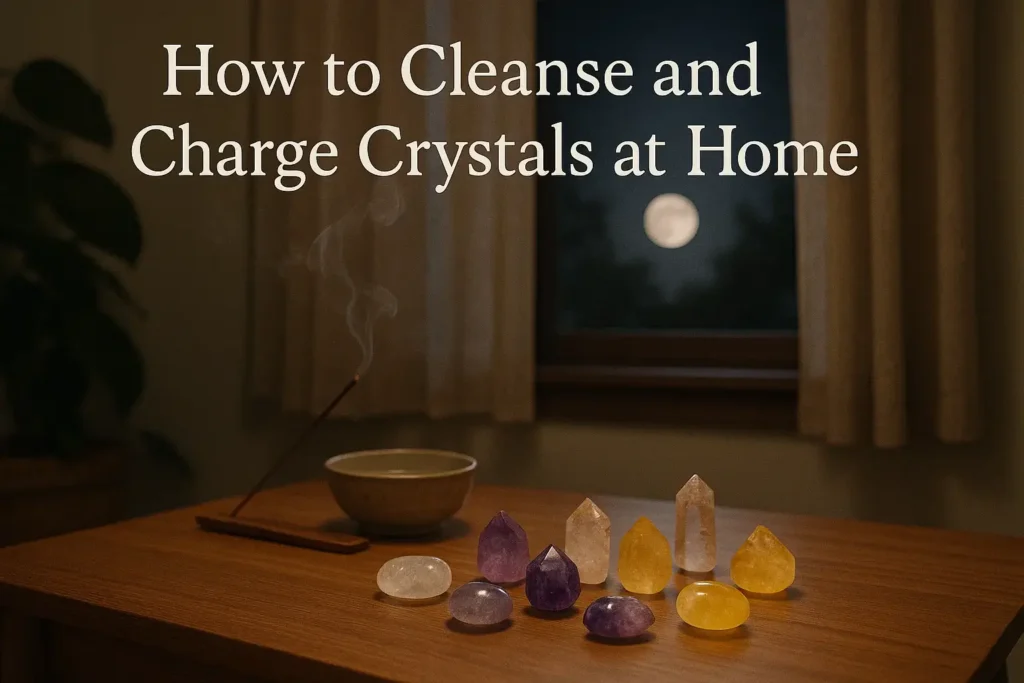
What does cleansing a crystal mean?
In crystal traditions, cleansing means clearing the energy people believe a stone may pick up through handling, daily wear, meditation, travel, or its surroundings. Physical cleaning is different. It removes dust, skin oils, or dirt from the surface.
Many people combine both forms of care. A soft cloth can keep a crystal physically clean, while moonlight, sound, smoke, or another personal ritual may be used for spiritual cleansing.
Crystals are often used as personal objects connected with meditation, intention, comfort, and reflection. These practices are based on spiritual traditions and personal belief rather than established scientific evidence.
What does charging a crystal mean?
Charging is usually described as preparing a cleansed crystal for continued use or reconnecting it with a personal intention.
Common charging methods include:
- Moonlight
- Brief sunlight for suitable stones
- A crystal cluster or geode
- Intention setting
- Selenite in traditional crystal practice
Some methods, especially moonlight, are commonly used for both cleansing and charging.
How to cleanse crystals at home
1. Use moonlight
Moonlight is one of the easiest choices for a mixed crystal collection because it does not expose the stones to water, salt, or harsh chemicals. Place your crystals on a windowsill, shelf, balcony, or protected outdoor area overnight.
A full moon is popular in crystal traditions, although you do not need to wait for one. Any night can be used as part of your personal routine. Moonlight is especially useful for stones that can fade in strong sunlight.
2. Cleanse crystals with sound
Sound is another contact-free method.
You can use:
- A singing bowl
- Bell
- Chime
- Tuning fork
Place the crystals nearby and let the sound continue for a short period.
This method is practical for fragile crystals or larger collections because the stones do not need to be washed or moved much.
3. Use incense or smoke
Some people pass crystals through incense or plant smoke as part of a cleansing ritual. Light the incense or other material and allow the smoke to move around the crystal briefly. Keep the room ventilated and use a heat-resistant holder.
LEMRA also carries Palo Santo wood sticks for people who already use smoke-based rituals in their personal practice.
Avoid smoke if you have respiratory sensitivity, pets that may be affected, or poor ventilation.
4. Rinse water-safe crystals
Water can remove dust and surface residue from some durable minerals. Quartz-family stones such as Clear Quartz, Amethyst, and Citrine generally tolerate a short rinse. Use cool or lukewarm water, keep the rinse brief, and dry the stone with a soft cloth afterward.
Avoid assuming that every polished crystal is water-safe. Water can damage or weaken certain minerals, especially softer, porous, layered, or metallic stones.
5. Use a dry cloth
For physical cleaning, a soft dry cloth is often enough.
This is a good starting point for:
- Polished stones
- Crystal jewellery
- Delicate specimens
- Stones you cannot identify confidently
A dry cloth removes dust and fingerprints without exposing the mineral to water or chemicals.
Crystals that should stay away from water
Some minerals need more careful handling. Selenite is a well-known example. It is a form of gypsum and can deteriorate with prolonged exposure to water.
You should also be cautious with stones such as:
- Selenite
- Halite
- Pyrite
- Malachite
- Fluorite
- Lepidolite
Mineral composition matters more than a crystal’s name or appearance. When you are unsure, choose a dry method.
LEMRA’s guide to the best crystals for home energy and protection also includes care notes for popular stones such as Selenite, Amethyst, Clear Quartz, and Black Tourmaline.
Can you cleanse crystals with salt?
Salt is widely mentioned in traditional crystal-cleansing practices, but direct salt contact is not suitable for every mineral. Salt can scratch softer stones, attract moisture, and contribute to damage in certain specimens.
If you want a low-risk routine, moonlight, sound, or another dry method is usually easier for a mixed collection. Avoid salt water unless you already know the exact mineral and know that both salt and prolonged moisture are safe for it.
How to charge crystals at home
Charge crystals in moonlight
Moonlight is a common choice because it suits many different crystals.
Place your stones near a window or in another protected place overnight. Bring outdoor crystals inside in the morning so they are not left in strong daytime sun or exposed to rain.
Use sunlight carefully
Short exposure to natural light can be used with some stones, but strong or prolonged sunlight may change the colour of certain minerals.
Amethyst can fade with extended UV exposure. Rose Quartz can also lose colour over time. For colour-sensitive crystals, moonlight is the safer option.
Use a crystal cluster
Some people place smaller stones on an Amethyst geode or Clear Quartz cluster as part of their charging routine. This method requires no water or salt and works well for small tumbled stones and jewellery.
Clear Quartz is commonly used in crystal traditions for intention setting and as part of larger crystal arrangements. You can read more in LEMRA’s guide to Clear Quartz meaning, benefits and uses.
Set an intention
You can also use a freshly cleaned crystal as part of a simple intention-setting practice.
Hold the stone comfortably and choose one clear purpose.
For example:
“I want to stay focused while I study.”
Keep the wording simple and connected to something you can act on.
How often should you cleanse your crystals?
There is no fixed schedule. For physical care, clean a crystal whenever you see dust, oil, fingerprints, or dirt. For spiritual cleansing, people often choose a routine based on how they use the stone.
You might cleanse a frequently handled crystal once a week, while a decorative stone on a shelf may only need occasional attention.
Common times people choose to cleanse crystals include:
- When they first buy a stone
- After carrying it regularly
- After meditation or personal rituals
- After another person handles it
- Before setting a new intention
- When they simply want to refresh their collection
A practical routine is better than repeatedly cleansing a stone without a reason.
Quick crystal cleansing guide
| Method | Suitable for | Main caution |
|---|---|---|
| Moonlight | Most crystals | Keep outdoor stones dry |
| Sound | Most crystals | Protect fragile pieces from movement |
| Incense or smoke | Most crystals | Ventilate the room |
| Dry cloth | Most crystals | Use a soft material |
| Running water | Water-safe minerals | Avoid soft, porous, metallic or water-sensitive stones |
| Salt | Limited use | Can scratch or damage some minerals |
| Sunlight | Selected stones | Can fade coloured crystals |
How to care for crystal jewellery
Crystal jewellery needs a little more care because water may affect both the stone and the metal, adhesive, coating, or setting.
For routine cleaning:
- Wipe the piece gently with a soft cloth.
- Keep it away from perfume, lotions, and household cleaners.
- Store pieces separately so harder stones do not scratch softer ones.
- Avoid soaking jewellery unless you know the stone and metal are water-safe.
If you wear crystals regularly, LEMRA’s guide on how to use crystals in daily life explains ways people use stones at home, at work, during meditation, and as jewellery.
Common mistakes when cleansing crystals
The most common problems come from using the same method for every stone.
Watch for these mistakes:
- Soaking an unidentified crystal in water
- Leaving Amethyst or Rose Quartz in strong sunlight for long periods
- Putting soft stones directly into coarse salt
- Using chemical cleaners on natural crystals
- Leaving crystals outdoors where rain or moisture can reach them
- Cleaning delicate jewellery the same way as a loose polished stone
When you do not know the mineral, use a soft cloth for physical cleaning and a dry, contact-free method for your personal cleansing ritual.
Frequently Asked Questions
Can I cleanse crystals with tap water?
Yes, if the specific mineral is water-safe. Clear Quartz and many other quartz varieties tolerate a brief rinse well.
Avoid water when you are unsure what the stone is.
How long should crystals stay in moonlight?
Many people leave them near a window overnight and collect them the following morning. There is no scientifically established charging time because crystal charging is a spiritual practice rather than a measured physical process.
Can I cleanse and charge crystals at the same time?
Moonlight is commonly used for both purposes in crystal traditions. You can also clean the crystal physically first, then use your preferred charging ritual afterward.
Should I cleanse a new crystal?
Many crystal users choose to cleanse a new stone before wearing, displaying, or meditating with it. From a physical-care perspective, wiping a newly purchased stone with a soft cloth is also a sensible way to remove dust and handling marks.
What is the safest cleansing method for beginners?
Moonlight, sound, and a soft dry cloth are simple choices because they avoid water, salt, and strong sunlight.
Find crystals and crystal care items at LEMRA Budapest
If you are building your first collection or adding new stones, you can browse LEMRA’s natural crystal collection, including raw crystals, polished stones, crystal shapes, and other pieces.
LEMRA Crystal & Jewellery is located at Párizsi utca 6a, 1052 Budapest, Hungary, and the current collection is also available online.