Blog
Labradorite Gemstone: : Meaning, Properties, Benefits, Uses & Care

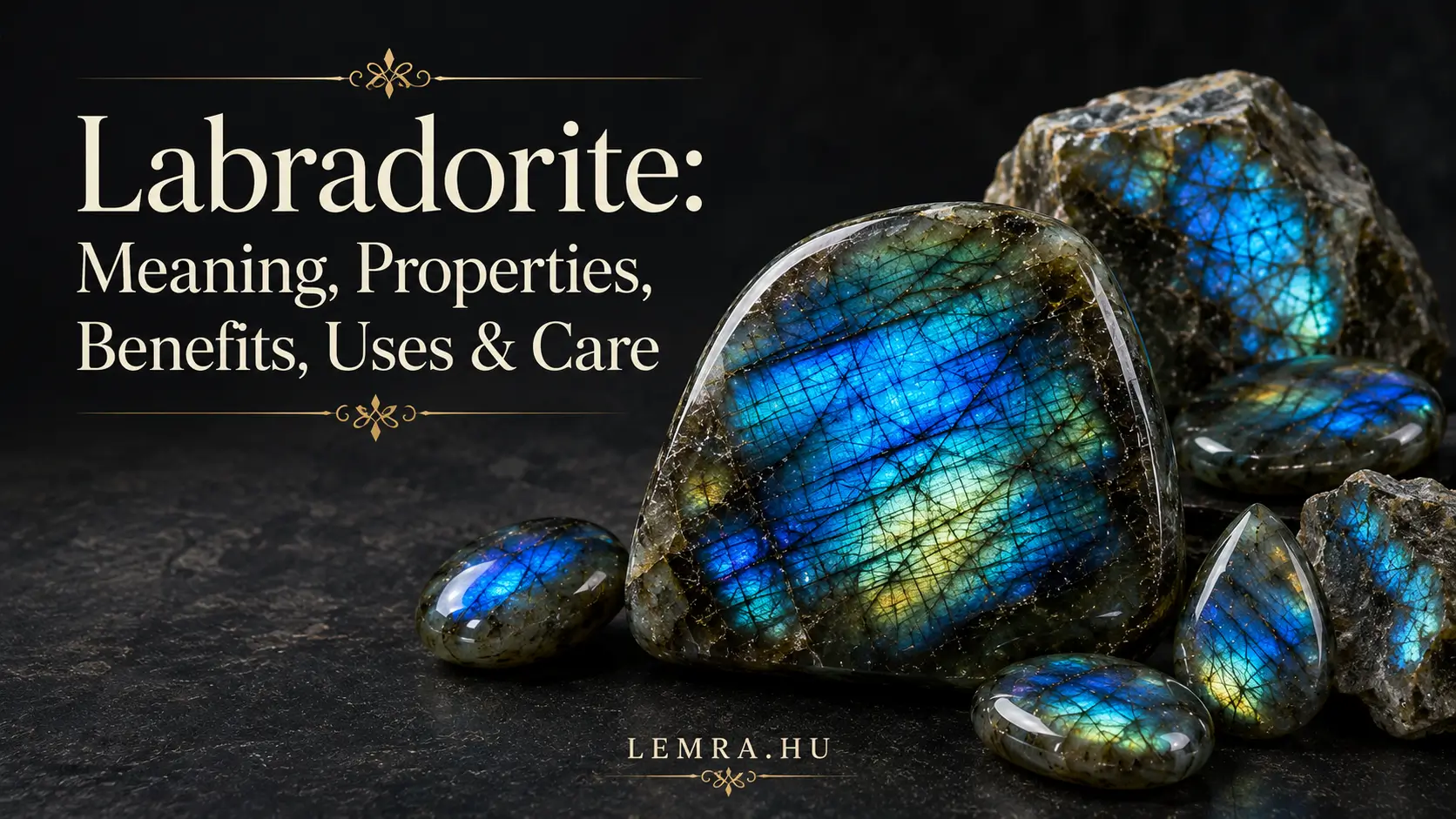
Labradorite is one of the most recognizable gemstones in the crystal world, known for the flash of blue, green, and gold that seems to appear out of nowhere when the stone catches the light. That optical effect, combined with a rich history and a strong following among crystal collectors, has made labradorite a favorite for jewelry, meditation tools, and home decor alike.
Table of Contents
This guide covers what labradorite actually is, how it forms, what it looks like, and what it means in crystal traditions. You will also find practical advice on wearing it, cleaning it, and telling a genuine stone from an imitation.
What Is Labradorite?
Labradorite is a mineral in the feldspar group, one of the most common mineral families found in the Earth’s crust. What sets it apart from other feldspars is an optical effect called labradorescence, which produces the colorful flash the stone is known for.
Labradorescence happens because of thin, layered structures inside the stone. When light enters at certain angles, it reflects off these internal layers and splits into visible colors, similar to how light behaves on a soap bubble. This is why a labradorite stone can look plain grey from one angle and suddenly show a vivid flash of color when it is turned.
The mineral takes its name from the Labrador Peninsula in Canada, where it was formally documented by European settlers in the late 1700s. Indigenous Inuit stories from the region describe the Northern Lights becoming trapped inside coastal rocks, a legend often associated with the stone. This is a cultural story rather than a documented geological event, and it is worth enjoying as folklore rather than treating it as historical fact.
Labradorite Colors and Varieties
Labradorite is not a single, uniform stone. Its base color, clarity, and the strength of its color flash can vary quite a bit depending on where it was mined and how it was cut.
Classic Labradorite
Most labradorite has a grey, dark green, or black base with flashes of blue and green. This is the most widely available and affordable type, commonly used in tumbled stones, palm stones, and everyday jewelry.
Spectrolite
Spectrolite is a trade name used for high-quality labradorite mined in Finland. It is prized for showing a fuller range of labradorescence, often including purple, red, and orange in addition to blue and green. Not every piece of Finnish labradorite qualifies as spectrolite, since the name refers specifically to material with strong, multicolor flash and good clarity.
Golden and Andesine Labradorite
Some sellers market a warm, golden or champagne-colored stone as “golden labradorite,” and this material is often actually andesine, a related but mineralogically distinct feldspar. Andesine and labradorite are both plagioclase feldspars, but they are not the same mineral. Some golden or reddish andesine on the market has also been linked to undisclosed treatments in the gem trade. If you are buying a golden or orange feldspar stone, it is worth asking the seller directly whether it is being sold as labradorite, andesine, or a treated stone.
What Affects Labradorite’s Appearance and Value
The intensity of the color flash, the base color, clarity, and the way the stone is cut all affect how a piece of labradorite looks and what it is worth. A well-cut stone that shows strong labradorescence from a natural viewing angle is generally considered higher quality than a dull piece with little visible flash.
Labradorite Properties
Labradorite belongs to the plagioclase feldspar mineral family. It typically forms in masses rather than large single crystals, which is why it is most often sold as tumbled stones, cabochons, or carved pieces rather than pointed natural crystals.
The stone has a Mohs hardness of approximately 6 to 6.5. This places it in a similar range to most quartz-based gemstones, which means it holds up reasonably well to daily wear but is not scratch-proof. It also has a cleavage plane, a natural weakness in its structure, which means it can chip or fracture if it is dropped or struck at the wrong angle.
Labradorite ranges from translucent to nearly opaque. Higher-clarity stones tend to show a sharper, more defined labradorescence, while more opaque stones show a softer, broader flash of color.
Labradorite Meaning and Symbolism
In crystal traditions, labradorite is often associated with change, self-discovery, and inner strength. Many practitioners describe it as a stone that supports people through periods of transition, whether that is a new job, a move, or a personal turning point.
It is also commonly linked to intuition and protection in these traditions, with some describing it as a stone that helps quiet outside distractions so a person can better trust their own judgment. These are spiritual and cultural beliefs passed down through crystal healing practices, not claims backed by scientific research.
Labradorite Benefits in Crystal Practices
Labradorite is used in a variety of spiritual and wellness practices. The benefits below reflect traditional crystal beliefs and personal experiences shared by practitioners, not medical or scientific claims.
Intuition and Inner Awareness
Many crystal practitioners associate labradorite with sharper intuition and inner insight. It is often used by people who want to feel more connected to their own instincts during decision-making.
Meditation and Mindfulness
Labradorite is a popular choice for meditation because holding a tactile object can help some people stay focused and present. Practitioners often hold the stone or place it near the forehead during a session.
Creativity and Self Expression
Artists, writers, and musicians sometimes keep labradorite nearby, believing it helps clear mental blocks and encourages fresh ideas. This is a widely shared belief in creative and crystal communities rather than a proven effect.
Symbolic Protection
In crystal traditions, labradorite is often carried or worn as a symbolic shield against negative energy or emotional overwhelm, particularly during stressful periods.
Personal Growth and Transformation
Because of its association with change, labradorite is frequently used by people going through a life transition, as a personal reminder to stay grounded and open to growth.
Labradorite Chakra and Zodiac Connections
Labradorite is connected to specific chakras and zodiac signs in crystal and astrology traditions. These associations are symbolic and spiritual rather than scientific.
Labradorite and the Third Eye Chakra
Labradorite is most commonly linked to the Third Eye Chakra, the energy center associated with intuition, perception, and inner vision in many crystal healing systems.
Labradorite and the Throat and Crown Chakras
Some traditions also connect labradorite to the Throat Chakra, linked to communication and self-expression, and the Crown Chakra, associated with spiritual connection and higher awareness.
Labradorite and Zodiac Signs
In crystal astrology, labradorite is often associated with Leo, Scorpio, and Sagittarius. These are traditional associations, and the stone is not limited to people born under these signs.
How to Use Labradorite
Labradorite can be incorporated into daily life in several simple ways, depending on whether your interest is more decorative, spiritual, or both.
Labradorite Jewelry
Rings, pendants, bracelets, and earrings are popular ways to wear labradorite regularly. A pendant is often chosen so the stone sits near the chest, while rings and bracelets offer a more everyday, low-maintenance option.
Labradorite for Meditation
Holding a piece of labradorite or placing it near the forehead during meditation is a common practice among people who use crystals as part of their mindfulness routine.
Labradorite at Home or Work
A tumbled or raw labradorite stone kept on a desk or shelf is a simple way to add a calming visual element to a room. Many people also enjoy displaying the stone simply for its natural beauty.
Labradorite for Energy Practices
Labradorite is sometimes used in Reiki sessions or chakra balancing work, where practitioners place the stone on or near the body. These practices are part of holistic and complementary wellness traditions, not medical treatment.
Labradorite as a Gift
Because of its association with transformation, labradorite makes a thoughtful gift for someone starting something new, such as a new job, a move, or a personal milestone. If you want to explore other stones with similar symbolic uses, our guide to crystals for manifestation covers several options worth considering together.
If you are looking to start with a simple, affordable piece, a Labradorite Tumbled Stone is an easy way to try the stone for meditation, everyday carry, or display.
How to Cleanse and Charge Labradorite
Cleansing and charging are spiritual practices rooted in crystal healing traditions, not scientifically established processes. Many practitioners believe that stones can pick up emotional or environmental energy over time and benefit from being reset regularly, though this is a belief rather than a measurable fact.
Common cleansing methods include:
- Rinsing briefly under lukewarm running water
- Smudging with sage or palo santo smoke
- Placing the stone near selenite, which some practitioners believe does not need cleansing itself
Charging typically involves leaving the stone under moonlight overnight, especially during a full moon. This is a traditional practice believed by many to restore a stone’s energy, though there is no scientific evidence that moonlight physically changes a mineral. Many people continue the practice for its symbolic and ritual value regardless.
For a broader routine that covers labradorite alongside other stones in your collection, see our full guide to cleansing and charging crystals at home.
How to Care for Labradorite Jewelry
Separate from spiritual cleansing, labradorite also benefits from basic physical care to keep it looking its best.
- Avoid soaking the stone in water for long periods, since prolonged moisture exposure can affect the polish over time.
- Keep labradorite away from harsh chemicals, including household cleaners, perfume, and chlorine.
- Avoid sudden temperature changes, such as moving the stone from a hot car into cold air, since this can stress the stone’s internal structure.
- Store labradorite separately from harder gemstones to prevent scratches, ideally in a soft pouch or lined box.
- Clean the surface gently with a soft, damp cloth rather than abrasive materials.
- Remove labradorite jewelry before activities like cleaning, exercising, or swimming to reduce the risk of chips or scratches.
How to Tell If Labradorite Is Real
Labradorescence is one of the clearest signs of genuine labradorite, but appearance alone is not always enough to confirm authenticity, since some imitations are made to mimic the effect. A few practical checks can help.
- Check the flash from multiple angles. Genuine labradorite typically looks dull or plain from most angles and only shows its color flash at specific angles under good light. A stone that looks equally bright and colorful from every direction may be dyed glass or a coated imitation.
- Look for natural variation. Real labradorite rarely looks identical piece to piece. If an entire batch appears exactly the same in color and pattern, that can be a sign of manufactured material.
- Examine the surface and structure. Natural stones often show subtle texture, inclusions, or irregularities under close inspection, while glass imitations tend to look more uniform.
- Compare weight when possible. Glass imitations can sometimes feel lighter or denser than genuine mineral material of a similar size, though this is not a reliable test on its own.
- Buy from a reputable seller. This remains the most reliable way to avoid imitation material, especially for larger purchases.
- Ask about origin and treatment. A trustworthy seller should be able to tell you where the stone was sourced and whether it has been treated or enhanced in any way.
Avoid destructive tests like scratching or cutting a stone to check authenticity, since these can damage a genuine piece without giving a reliable answer.
Labradorite vs Moonstone
Labradorite and moonstone are both feldspar minerals and are sometimes confused because they can share a shimmering appearance. The key difference is in the type of optical effect each one produces.
Labradorite shows labradorescence, a flash of distinct colors like blue, green, or gold that appears at certain angles. Moonstone shows adularescence, a softer, milky glow that seems to float just beneath the surface of the stone. In crystal traditions, moonstone is often linked to new beginnings and emotional balance, while labradorite is more associated with transformation and protection.
Common Labradorite Buying and Care Mistakes
- Assuming all bright, colorful stones are genuine. A strong, uniform color from every angle is more likely a sign of an imitation than a high-quality natural stone.
- Skipping basic physical care. Treating labradorite like an indestructible stone can lead to avoidable scratches or chips over time.
- Leaving it in direct sunlight for long periods. This will not affect the mineral’s structure, but prolonged sun exposure can make the color flash appear less vivid.
- Buying from unverified sellers to save money. Lower prices are sometimes tied to lower-quality or imitation material, so it is worth checking a seller’s reputation first.
- Expecting spiritual practices to replace professional care. Meditation and energy work with crystals are personal, complementary practices and are not a substitute for medical or mental health care.
FAQs About Labradorite
Is labradorite a birthstone?
Labradorite is not an official modern birthstone. Some crystal traditions loosely associate it with February and March, but this is an informal, alternative association rather than a recognized birthstone designation.
What is labradorite good for?
In crystal traditions, labradorite is associated with intuition, protection, creativity, and support during periods of personal change. These are spiritual and traditional beliefs rather than scientifically proven effects.
What chakra is labradorite associated with?
Labradorite is most commonly linked to the Third Eye Chakra, and some traditions also connect it to the Throat and Crown chakras.
Can I wear labradorite every day?
Yes. With a Mohs hardness of about 6 to 6.5, labradorite holds up reasonably well to daily wear, though it can still chip or scratch if handled roughly or worn during activities like exercise or cleaning.
What is the difference between labradorite and moonstone?
Labradorite shows labradorescence, a flash of distinct colors at certain angles. Moonstone shows adularescence, a soft, milky glow. Both are feldspar minerals but produce different optical effects.
Which zodiac signs are associated with labradorite?
Labradorite is most often linked to Leo, Scorpio, and Sagittarius in crystal astrology traditions, though it is commonly used and worn by people of any sign.
Final Thoughts on Labradorite
Labradorite stands out for good reason. Its shifting flash of color makes every piece a little different, and its long history, from Canadian mineral deposits to Inuit legend to modern jewelry collections, gives it a story worth knowing before you buy.
If you are curious about adding labradorite to your own collection, take a look at our Labradorite Tumbled Stone or browse the wider selection at LEMRA Crystals & Jewellery.


