

Blog
Evil Eye Jewellery: Meaning and Protection Stones

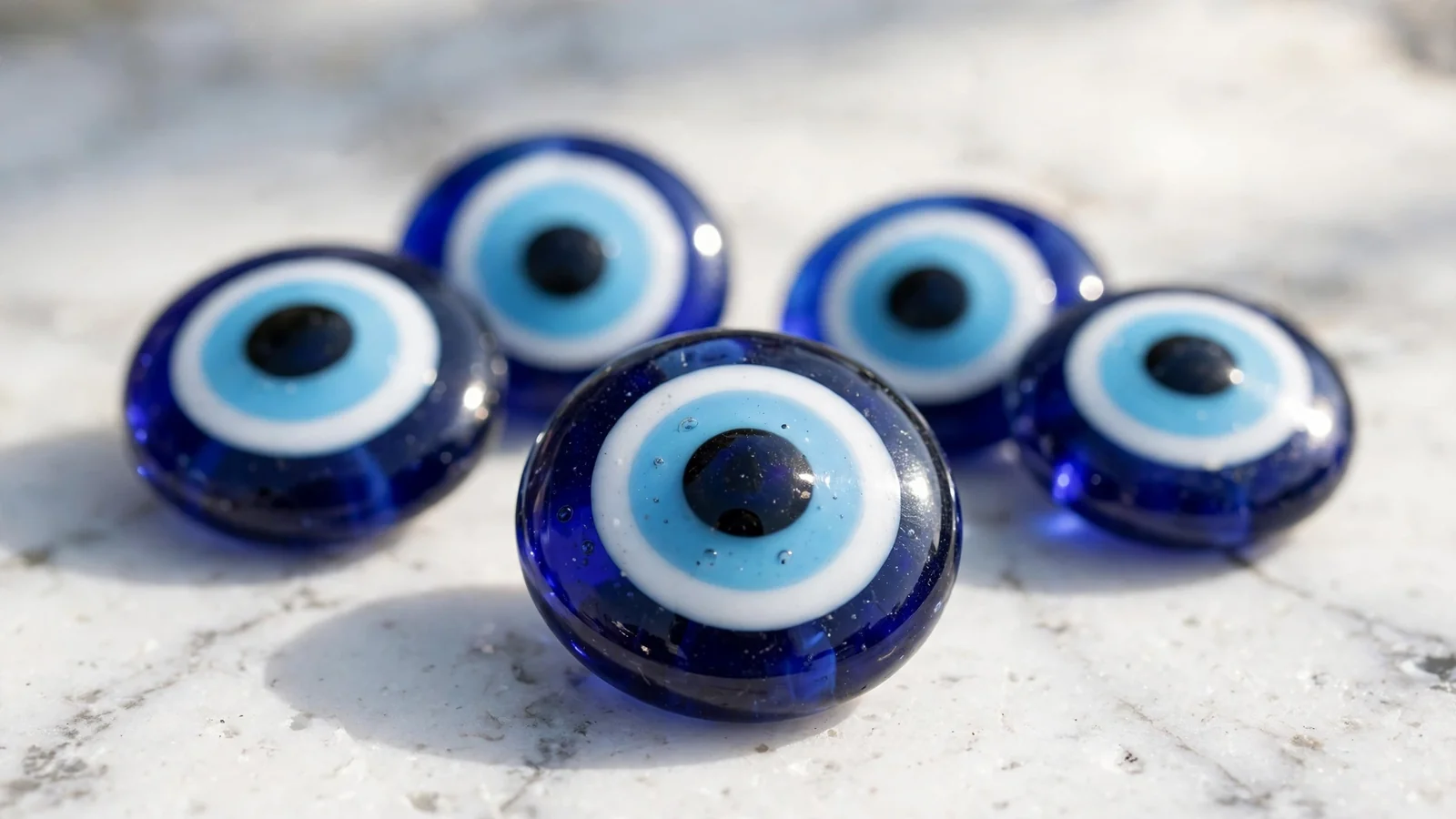
Evil eye jewellery carries a blue eye charm called the nazar. People wear it against the evil eye: the belief that an envious or admiring look can bring harm to the person it lands on.
The idea is over 5,000 years old, and the glass bead is still made by hand in Turkey today. This guide covers the meaning, the history, the colours, how to wear a piece, and the protection stones people pair with it.
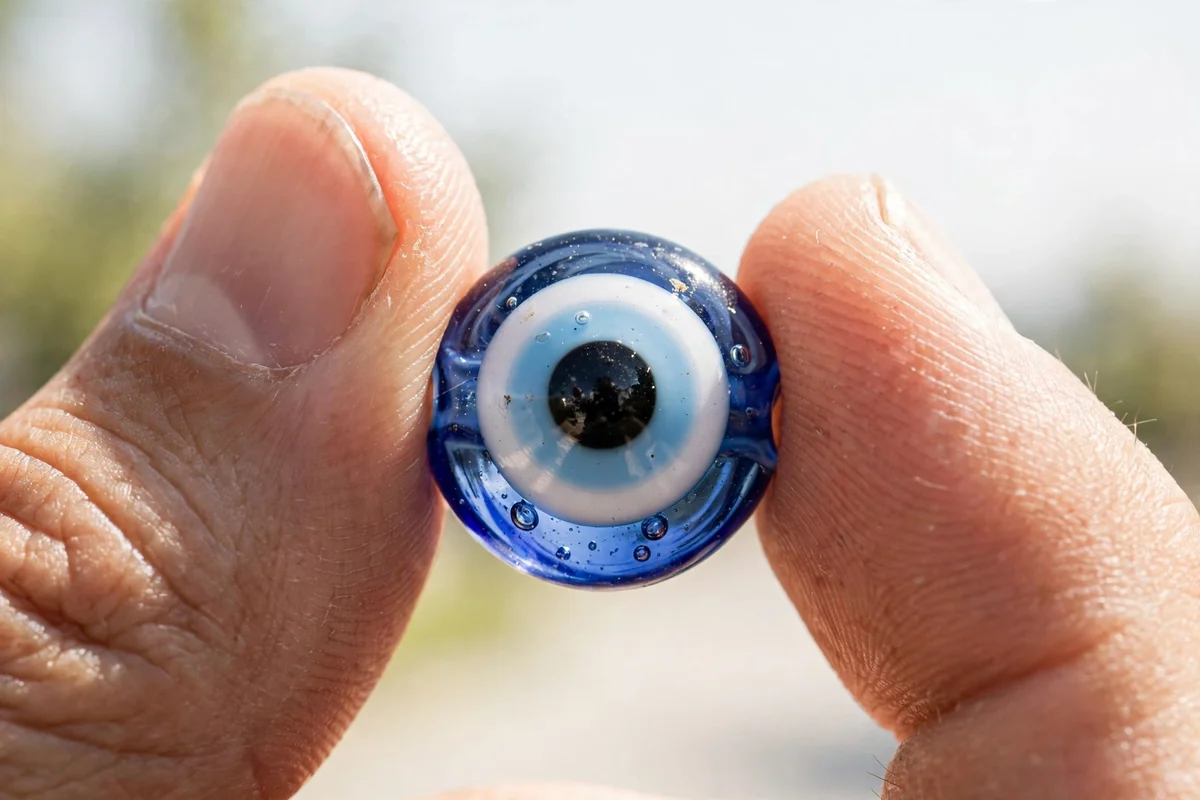
What does the evil eye mean?
Two things share the name. The evil eye is the harmful look itself: a gaze that carries envy, admiration or ill will, and that tradition says can bring bad luck, illness or loss to the person it lands on. The look needs no bad intent. Admiration alone counts in the tradition.
The jewellery is the defence. The blue eye bead, the nazar, shows an eye of layered rings in dark blue, white, light blue and black. Tradition says the hostile gaze lands on the bead instead of the wearer, and the bead sends it back.
The idea has many names. Turks call the bead nazar boncugu. Greeks call it mati. Spaniards call the look mal de ojo, Italians malocchio, and in Hebrew tradition it is ayin hara.
Where does the evil eye come from?
The belief is one of the oldest shared ideas in the world. Eye-shaped figures carved from alabaster turned up at Tell Brak, in present-day Syria, from around 3,300 BCE. Sumerian texts from around 3,000 BCE name the harmful gaze. Blue glass eye beads date to around 1,500 BCE in Egypt and Mesopotamia.
Greeks called the gaze baskania and Romans called it fascinum. Both cultures wore amulets against it. The idea spread across the Mediterranean with trade, and it stayed in daily life through the Ottoman Empire, where the Turkish nazar bead took its modern shape.
The bead is still made by hand in Gorece and Nazarkoy, two villages near Izmir in Turkey, in wood-fired furnaces and without moulds. The dark blue colour has a local reason: dark eyes are the norm across the region, and light eyes belonged to strangers and travellers, so blue became the colour that stops the look.
What do the evil eye colours mean?
Dark blue is the traditional colour, and the only one with real historical roots. The other colours carry modern meanings that jewellers and sellers use today. Treat them as gift language, a way to pick a piece with intent, rather than fixed rules.
- Dark blue: classic protection, calm, good karma. The safe first choice.
- Light blue: peace, clarity, open communication.
- Black: strength and a firm shield. Often paired with black onyx or black tourmaline.
- Red: courage, energy, confidence.
- Green: balance, growth, new beginnings.
- White: purity, clarity, fresh starts.
- Yellow or gold: health, focus, prosperity.
- Pink: love and friendship.
If you are unsure, dark blue is the choice that fits every occasion.
Evil eye vs hamsa: what is the difference?
The two symbols sit side by side in most jewellery shops, and people mix them up. They come from overlapping traditions, and each does its own job.
The evil eye, the nazar, is a single blue eye. It has one job: turn the envious gaze back to its source.
The hamsa is an open hand. Its name comes from the Semitic root for five, for the five fingers. In Islamic tradition it is the Hand of Fatima, and in Jewish tradition the Hand of Miriam. It gives broader protection and, worn fingers down, it invites blessings and good fortune. Fingers up, it works as a raised palm against harm.
The two often join in one piece: an eye set in the palm of the hand. The hand guards, and the eye in its palm watches back.
How to wear evil eye jewellery
Bracelets are the most common form, and the left wrist is the usual choice. Folk belief links the left side with the heart and the inner life, and the right side with work and dealings with the outer world. There is no strict rule, and many people wear the bracelet on whichever wrist feels right.
Necklaces, rings and earrings work the same way. Wear the piece where it can be seen. Tradition says the charm must meet the look to catch it.
The same symbol hangs in homes, over doorways, in cars and above cradles. A doorway hanging guards the whole household.
A gifted piece carries the giver’s wish for your protection, which is why evil eye jewellery is a common present for a new baby, a new home or a new job. Buying your own piece is accepted in every tradition that uses the symbol. LEMRA’s Crystal Bracelet Guide covers which wrist suits each of 70 crystals.
Protection stones to wear with an evil eye
People often pair the nazar with a protection stone, either on the same bracelet or on the other wrist. These five are the common choices in crystal practice.
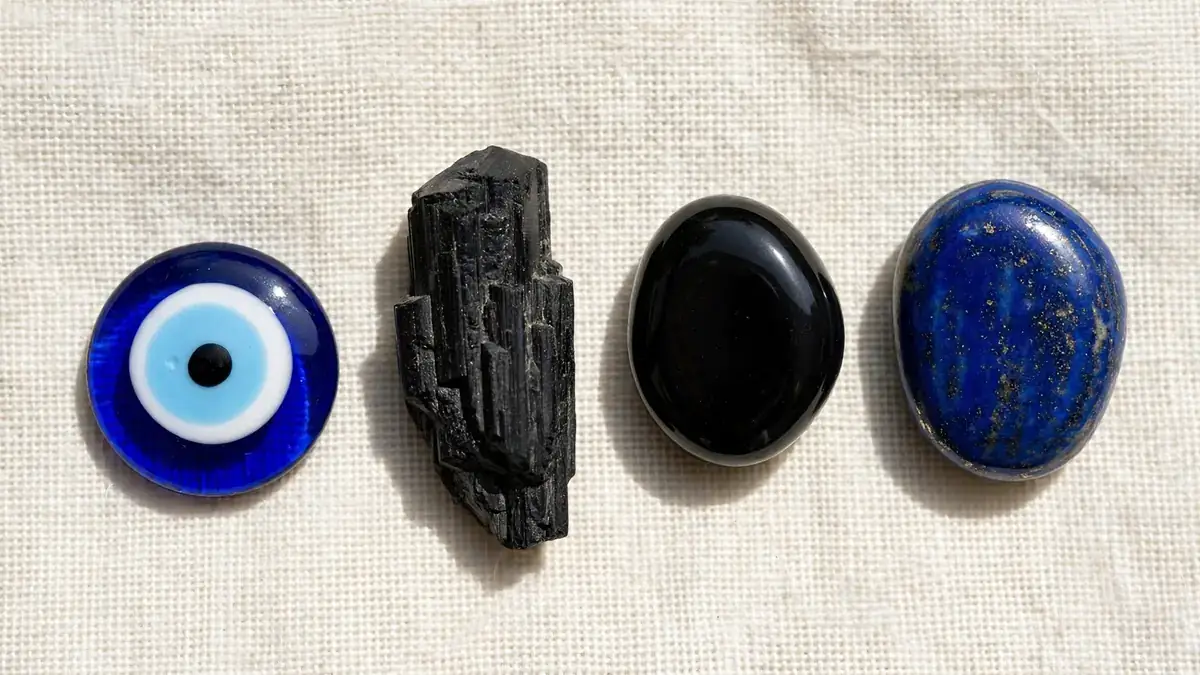
Black tourmaline: the standard protection stone. Crystal practice uses it for grounding and for keeping unwanted energy out. LEMRA’s guide to crystals for home energy protection covers it first.
Black obsidian: volcanic glass with a sharp, direct energy in crystal practice. It pairs well with the blue bead. LEMRA stocks a Black Obsidian bracelet.
Lapis lazuli: deep blue, so it sits well beside the nazar. Crystal practice links it with calm and clear thought. LEMRA stocks a Premium Lapis Lazuli bracelet.
Hematite: a heavy, grounding stone, often worn when the day needs steadiness.
Tiger’s eye: confidence and focus, and a warm brown-gold colour that balances the blue.
Keep the pairing simple. One stone and one eye bead is enough.
How to cleanse evil eye jewellery
Cleanse a piece when you first get it, then about once a month, or after a hard week. Four methods are common.
- Moonlight: leave the piece on a windowsill overnight, ideally under a full moon.
- Running water: hold it under a tap for a few minutes and pat it dry.
- Dry salt: rest it on a bed of sea salt overnight, then brush the salt off.
- Smoke: pass it through sage or palo santo smoke.
Salt water suits plain glass beads, but it can corrode metal parts and dull some stones, so keep metal jewellery out of it. Strong sun can fade coloured glass, so use moonlight for blue beads. LEMRA’s guide on how to cleanse and charge crystals at home gives the full steps.
What to do when an evil eye breaks
A break is good news in the tradition. The bead is said to have absorbed something meant for you and reached its limit doing so. In Turkey, people say “nazar cikti”: the evil eye came out.
Do not repair the piece. Tradition treats a broken charm as complete, and keeping it means carrying what it already took in. Dispose of the pieces with intent: bury them, or put them in a bin outside your home. Then replace the piece when you are ready.
A break is not always a sign. Glass cracks when it falls, and bracelet thread wears thin with daily use. Check the cord and the setting before you read meaning into it.
Protection stones at LEMRA
LEMRA stocks the protection stones people pair with an evil eye: black obsidian, lapis lazuli, tiger’s eye, hematite and black tourmaline bracelets, plus raw stones for the home. The Crystal Bracelet Guide lists 70 crystals with the wrist that suits each one.
You can see the stones in the Budapest shop at Parizsi utca 6a, or order from the online shop. Every piece is natural stone, labelled honestly, including treated stones. Ask in the shop if you want help matching a stone to an evil eye piece.
FAQs
Can I buy an evil eye bracelet for myself, or must it be a gift?
You can buy your own. A gifted piece carries the giver’s wish, which is why the charm is a common present, but no tradition requires you to wait for a gift. Buy the piece with a clear intent and wear it the same day.
Which hand do you wear an evil eye bracelet on?
The left wrist is the usual choice. Folk belief links the left side with the heart and inner life. The right wrist is also worn, usually for work and outer dealings. No rule is strict.
What does it mean when my evil eye bracelet breaks?
Tradition says the charm absorbed something meant for you and did its job. Read it as protection that worked. Do not repair it. Dispose of the pieces and replace the bracelet when you are ready.
Is the evil eye religious?
No single religion owns it. The belief is older than the religions that use it today, and Jewish, Muslim, Christian, Hindu and secular people all wear the symbol. Some religious scholars discourage amulets, so check your own tradition if that matters to you.
Can I wear an evil eye with other crystals?
Yes. The common pairings are black tourmaline, black obsidian and hematite for protection, and lapis lazuli for calm. Wear the eye bead and the stone on the same bracelet, or one on each wrist.
How often should I cleanse evil eye jewellery?
Once a month is the common rhythm. Cleanse it sooner after a stressful time, or when the piece starts to feel heavy. Moonlight overnight is the gentlest method for blue glass beads.