Blog
Gua Sha vs Face Roller: Which One Does Your Skin Actually Need?

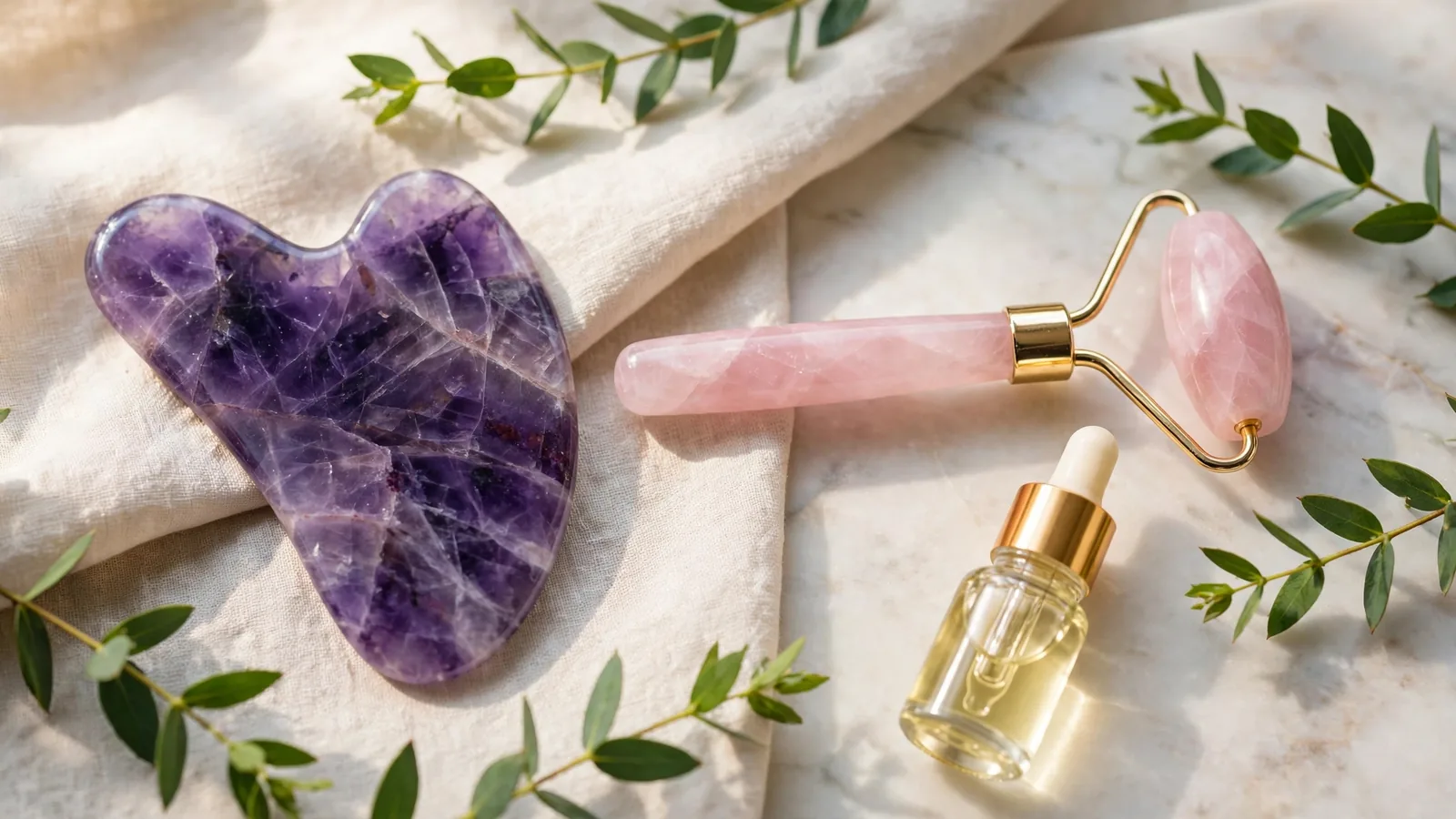
A gua sha stone and a face roller do different jobs. Gua sha uses firm, slow strokes with a flat stone edge. It works on facial muscle tension, jaw tightness and fluid movement along the jaw and cheeks. A face roller uses a rolling stone on a handle. It is gentler, faster, and it suits morning puffiness and daily serum application.
If you want one tool only, pick gua sha for tension and a longer evening routine, and pick a face roller for quick de-puffing and an easy daily habit. Many people end up using both, gua sha first and the roller after it. The sections below give the evidence, the steps and the prices so you can decide with real information.
What is a gua sha stone?
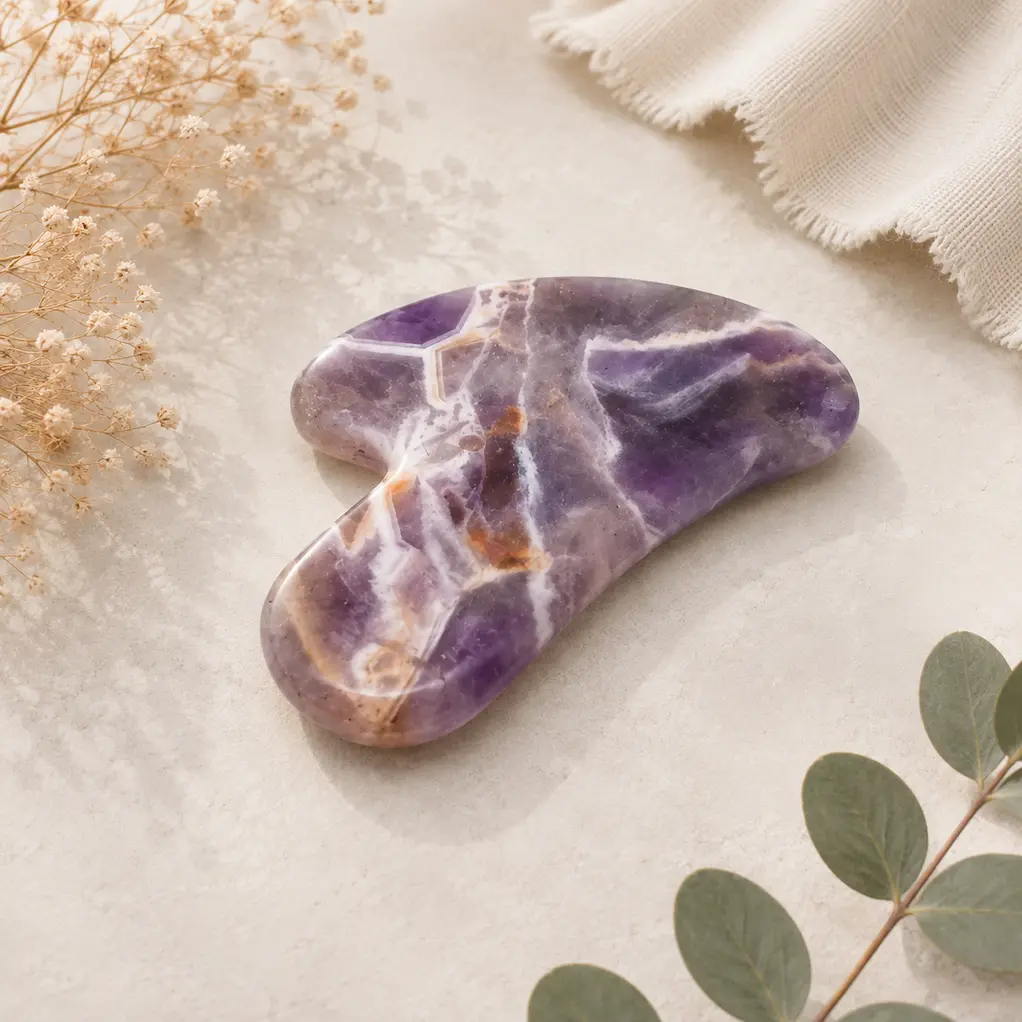
Gua sha is a flat stone tool with curved edges and usually one notched edge. The practice comes from traditional Chinese medicine, where practitioners used firmer strokes on the body. Facial gua sha is a gentler version. You hold the stone almost flat against the skin, at a low angle, and sweep it upward and outward in slow strokes.
The stone has no moving parts. Pressure and direction come from your hand, which is why technique matters more with gua sha than with a roller. A session takes 5 to 10 minutes.
At Lemra, gua sha stones come in amethyst, clear quartz and jade. Prices start at 12 EUR for the Amethyst Gua Sha.
What is a face roller?
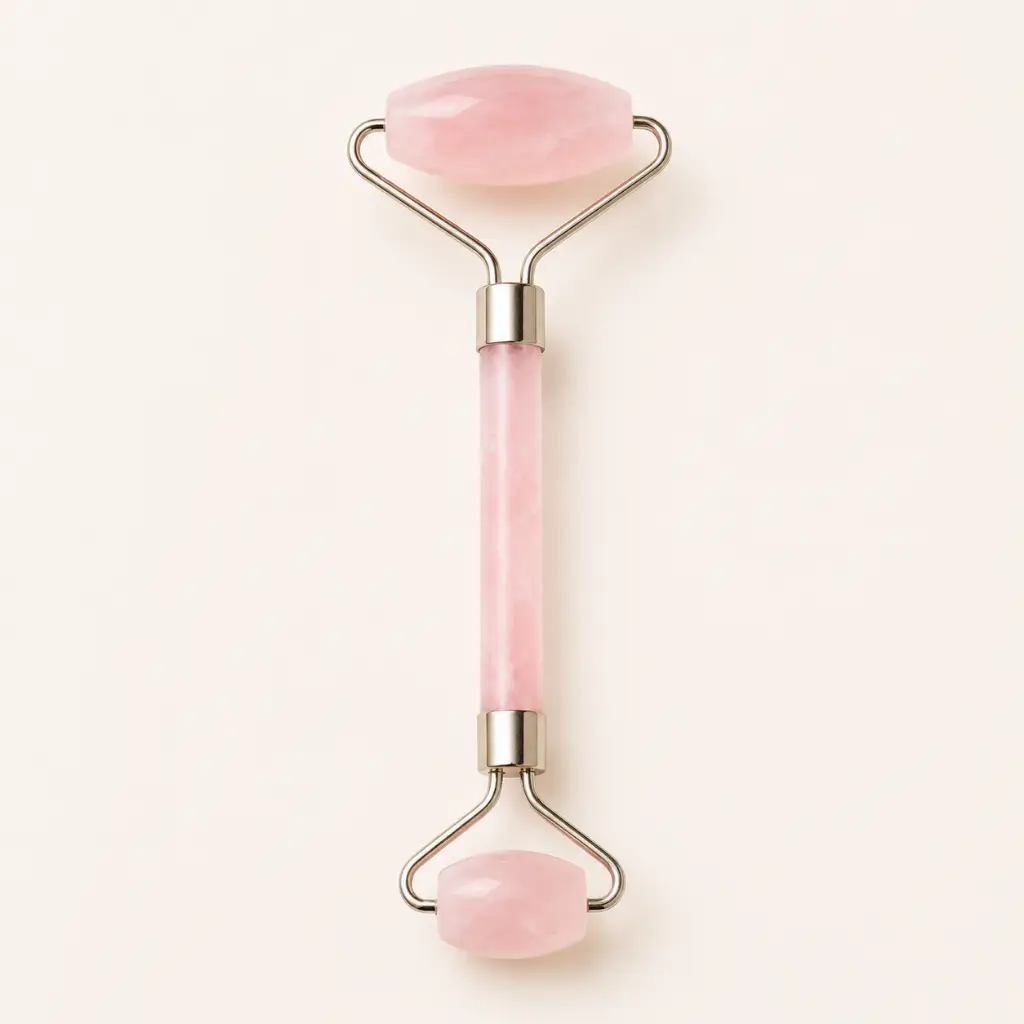
A face roller is a handle with a smooth stone barrel at each end. The large end covers the cheeks, forehead and jaw. The small end fits under the eyes and around the nose. You roll it over the skin in upward and outward strokes with light pressure.
A roller needs almost no technique. Clean skin, a layer of serum or oil, and 2 to 3 minutes of rolling is a full session. Stone rollers feel cool on the skin, and 10 minutes in the fridge makes the cooling effect stronger.
Lemra sells rollers in rose quartz, jade, obsidian, amethyst, amazonite, onyx and jasper. Prices start at 15 EUR.
Gua sha vs face roller at a glance
| Point | Gua sha stone | Face roller |
|---|---|---|
| Main job | Muscle tension, jaw release, fluid movement | Puffiness, cooling, product spread |
| Pressure | Medium, controlled by your hand | Light |
| Time per session | 5 to 10 minutes | 2 to 3 minutes |
| Skill needed | You need to learn stroke direction and angle | Almost none |
| Best time | Evening | Morning, or any time |
| Oil needed | Yes, always, so the stone glides | Helpful, works over serum or cream too |
| Risk if used badly | Bruising, broken capillaries, irritation | Very low |
| Lemra price from | 12 EUR | 15 EUR |
What the evidence actually shows
One study gives a direct comparison. In 2025, researchers published a randomised controlled trial in the Journal of Cosmetic Dermatology. They assigned 34 women to a facial roller or a gua sha routine, 10 minutes a day, 5 days a week, for 8 weeks, and measured the face with 3D scanning and skin instruments.
The roller group improved skin elasticity by about 7 to 9 percent. The gua sha group reduced muscle tension and stiffness in the face. Both groups showed small contour changes of about 2 to 3 mm.
Read those results with care. The trial was small, it covered one group of women in South Korea, and it had no group that used no tool at all. The changes were real and measured, and they were modest. Plan on that scale of result: less morning puffiness, a calmer jaw, skin that feels smoother after a session. Neither tool reshapes bone, melts fat or lifts sagging skin for good. Pages that promise a new jawline in a week are selling you a claim the evidence does not support.
The de-puffing effect has a simple cause. Massage moves fluid under the skin, and fluid is the main reason a face looks puffy in the morning. That is also why the effect fades during the day and why daily use matters more than one long session.
How to use a gua sha stone
- Start with clean skin. Apply facial oil or a rich serum. Gua sha on dry skin drags and irritates, so this step is required.
- Hold the stone flat, at a low angle of about 15 to 45 degrees against the skin. A steep angle scrapes. A flat angle glides.
- Sweep upward and outward. Work in one direction, lift the stone at the end of each stroke, and place it back at the start.
- Use this order: neck first, then jaw, cheeks, under the eyes with the notched edge and very light pressure, brow, and forehead last.
- Repeat each stroke 3 to 5 times, as Lemra’s product guide states for its Amethyst Gua Sha.
- Keep pressure medium on the jaw and cheeks and light everywhere else. Stop if you see bruising. Redness that fades within minutes is common. Marks that stay are a sign you pressed too hard.
How to use a face roller
- Start with clean skin and apply your serum, oil or moisturiser.
- Roll from the centre of the face outward, and upward on the cheeks and forehead. Lemra’s Rose Quartz Roller guide gives the same direction: centre outward, light pressure, until the product is spread and absorbed.
- Use the large end for cheeks, forehead and jaw. Use the small end under the eyes, rolling outward toward the ears.
- Roll each area 4 to 5 times. A full face takes 2 to 3 minutes.
- For morning puffiness, store the roller in the fridge and use it cold. Lemra also lists fridge use for its Obsidian Roller Massager, with warm water as an option when you want a warm massage on the neck and shoulders instead.
- Wipe the stone after use. Lemra’s cleaning note for the Rose Quartz Roller is a dry or damp cloth, and no soaking in water.
Which one should you choose?
Choose gua sha if your jaw feels tight at the end of the day, you clench your teeth, or you want a slower evening routine and you will spend 5 to 10 minutes on it. Gua sha gives you control over pressure and direction, and the trial above links it to reduced facial muscle tension.
Choose a face roller if your main problem is morning puffiness, you want a tool you can use half asleep, or your skin is sensitive and reacts to firm pressure. A roller is also the safer first tool for a teenager or a complete beginner.
Choose both if you like a two-step routine. Use gua sha first for the jaw, cheeks and neck, then finish with a cold roller to calm the skin and spread your last product. The two tools cover different jobs, so a set is a practical buy rather than a duplicate.
Which stone should you pick?
The stone changes the feel and the care, and in crystal practice each stone also carries a traditional meaning. Pick on feel and use first.
- Jade is the traditional choice for both tools. It feels cool and smooth, and it suits daily use. Lemra’s Traditional Jade Roller costs 15 EUR, down from 21 EUR, and the Heart Design Gua Sha Board in natural jade is 6,000 Ft on the crystals shape page.
- Rose quartz stays cool for a long time, which helps under the eyes in the morning. The Lemra Rose Quartz Roller Massager costs 15 EUR, down from 22 EUR.
- Amethyst is the calm option in crystal practice, and many people use it in an evening routine. The Lemra Amethyst Gua Sha costs 12 EUR, the lowest entry price in this guide. Read more in the Lemra guide to amethyst.
- Clear quartz is hard, smooth and easy to clean. The Lemra Clear Quartz Gua Sha costs 16 EUR.
- Obsidian holds temperature well. You can chill it for de-puffing or warm it in warm water for neck and shoulder work. The Lemra Obsidian Roller Massager costs 16 EUR.
Natural stone varies in colour from piece to piece. Lemra states this on its roller page, and it applies to every stone tool in the shop.
Safety and care
- Skip both tools on broken skin, active acne flare-ups, sunburn, rashes and fresh cosmetic injections. Wait until the skin settles.
- Use oil with gua sha every time. Dry scraping is the most common cause of irritation.
- Clean each tool after use with a damp cloth and mild soap, then dry it fully. Stone tools can pick up oil and bacteria from the skin.
- Store stone tools in a pouch or box. Amethyst, quartz and jade can chip or crack if they drop on a hard floor.
- For general stone care, including which stones should stay away from water, see the Lemra guide on how to cleanse and charge crystals at home.
Frequently asked questions
Can I use gua sha and a face roller on the same day?
Yes. Use gua sha first, then the roller. Gua sha does the firm work on tension and fluid. The roller calms the skin after it and spreads your final product.
How often should I use each tool?
A roller suits daily use, 2 to 3 minutes a session. Gua sha suits 3 to 5 sessions a week at the start. Daily gua sha is fine once your pressure is correct and your skin shows no marks.
Is gua sha supposed to leave marks?
On the face, no. Body gua sha in traditional practice can leave marks. Facial gua sha uses light to medium pressure and should leave, at most, redness that fades fast. Bruising means you pressed too hard or skipped the oil.
Which tool is better for a jawline?
Gua sha, because you control the edge and the pressure along the jaw. The 2025 trial also links gua sha to reduced facial muscle tension and small contour changes. Expect a modest change over weeks of regular use.
Do I need a special oil?
No. Any facial oil or rich serum that gives slip for 5 minutes of strokes works. Avoid dry skin and avoid thick creams that absorb in seconds, because the stone will drag once the surface dries.
Conclusion
Gua sha and a face roller are not rivals. They do different jobs. Gua sha works on muscle tension and jaw tightness with firm, slow strokes. A roller cools the skin, cuts morning puffiness and takes two minutes. Pick the tool that matches the job you actually have, and use it often. A short daily session beats one long session once a week.
At Lemra, prices start at 12 EUR for a gua sha stone and 15 EUR for a roller, so you can start with one tool and add the second later.