
Jade Stone Meaning: Benefits, Types, Healing Properties & How to Spot Real Jade
Jade is one of the oldest gemstones people have ever loved. For thousands of years, it has stood for good luck, wisdom, and peace. Ancient Chinese emperors called it the “stone of heaven.” Mayan healers used it in rituals. Today, people still wear it as jewelry, keep it at home for good energy, or use it in skincare.
But what does jade actually mean, and how do you know if the one you’re buying is real? In this guide, you’ll learn everything about jade stone meaning, its healing properties, the different types and colors, how it’s used today, and simple ways to check if your jade is genuine.
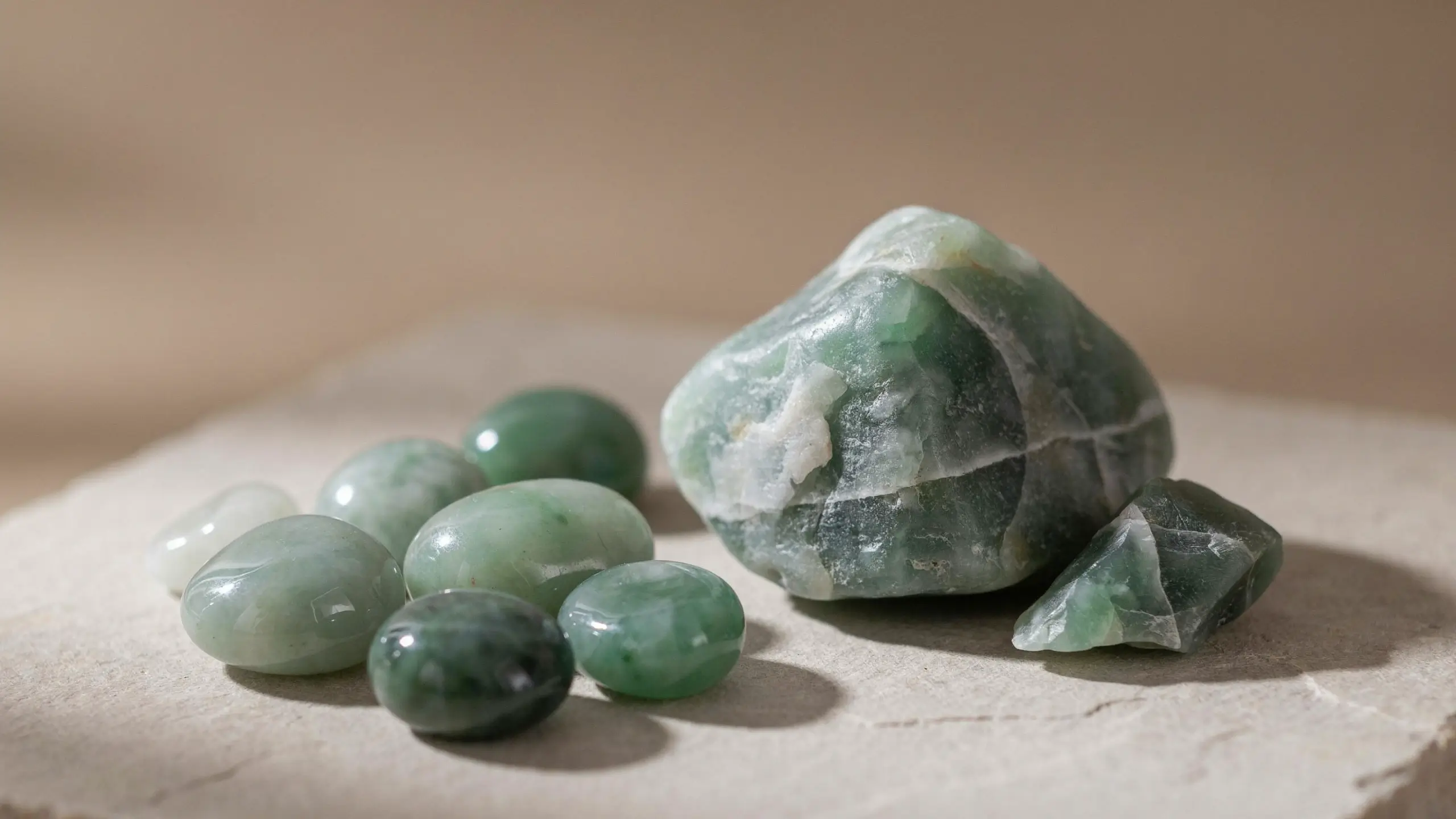
What Is Jade Stone?
Jade is not one single mineral. It is actually a name given to two different stones: nephrite and jadeite. Both are tough, smooth, and take a beautiful polish, which is why they have been carved into jewelry, tools, and art for centuries.
- Nephrite is more common and slightly softer. It usually comes in shades of green, cream, and grey.
- Jadeite is rarer, harder, and more valuable. It can come in a wider range of colors, including the prized emerald-green shade and even lavender.
If a piece of jewelry is simply labeled “jade,” it is most likely nephrite, since jadeite is far less common and priced much higher. Knowing this difference matters if you’re buying jade for its beauty, its meaning, or as an investment piece.
The Meaning Behind Jade
Jade carries deep cultural and spiritual meaning that goes back over 6,000 years. In Chinese culture, it is called the “stone of heaven” and represents purity, wisdom, and prosperity. It was buried with emperors, carved into royal seals, and passed down as a family treasure believed to protect its owner.
The word “jade” itself comes from the Spanish phrase piedra de ijada, meaning “stone of the colic,” because early Spanish explorers in Central America saw it used to ease pain. In Mesoamerican cultures like the Maya and Olmec, jade was considered more valuable than gold and was used in sacred offerings and burial rites.
Across cultures, jade is consistently linked to three ideas: harmony, protection, and good fortune. People still wear it today as a personal talisman, hoping to carry a little of that same balance and luck.
Types of Jade by Color
Jade doesn’t only come in green. Each color is believed to carry its own meaning:
- Green Jade – The most well-known type. It symbolizes harmony, wealth, and good health, and is closely tied to the heart chakra.
- White Jade – Represents purity, clarity, and a calm, focused mind.
- Lavender Jade – A rarer jadeite variety linked to spiritual awareness and emotional healing.
- Yellow Jade – Associated with joy, optimism, and confidence.
- Black Jade – Known as a grounding and protective stone that absorbs negative energy.
- Blue Jade – A calming shade said to support honest communication and clear thinking.
Some collectors like to build a small set with a few colors, since each one is thought to support a different area of life. If you’re building your own collection, our raw crystals selection is a good place to start exploring natural, uncut stones.
Jade in Feng Shui
Jade holds a special place in Feng Shui. It is linked with Wood energy, which represents growth, new beginnings, and vitality. Practitioners often place jade carvings, such as jade dragons, fish, or Buddha figures, in the southeast “wealth corner” of a home or office to invite prosperity.
A piece of jade on a work desk is also thought to support clear decision-making, while jade near the entrance is believed to welcome positive energy into the home. Whether or not you follow Feng Shui closely, there’s something calming about having a smooth, cool jade piece nearby.
Jade, Zodiac Signs, and Birthstones
Jade is closely connected to the heart chakra, which is why it’s often recommended for the earth and air signs that value balance and connection: Taurus, Libra, and Virgo. Taurus is even considered jade’s traditional zodiac sign, since both share a grounded, steady energy.
Jade is also known as a mystical birthstone for March and is a traditional gift for a 12th wedding anniversary, symbolizing lasting luck and harmony in a relationship. If you’re shopping for a zodiac-specific gift, our Virgo crystal set includes jade alongside other stones chosen to match Virgo’s calm, detail-oriented energy.
Incredible Benefits of Jade
Jade is valued for more than its color. Here’s what people believe it can offer:
1. Emotional Calm
Jade is known for its soothing energy. It’s often used to ease stress, anxiety, and overwhelming emotions, helping bring a sense of steady calm. If emotional balance is your main goal, you may also want to read our guide on crystals for anxiety relief, which pairs well with jade.
2. Supports Wellness
Many believe jade supports circulation and helps the body feel more relaxed. This is part of why jade massage tools have become so popular — the cool, smooth stone feels genuinely soothing on the skin.
3. Attracts Wealth and Luck
Jade has long been seen as a symbol of prosperity. People keep jade jewelry, carvings, or loose stones nearby to invite success and good opportunities.
4. Supports Spiritual Growth
Jade is often used during meditation to quiet the mind and connect with inner wisdom. It’s considered a gentle stone for self-reflection rather than an intense one, which makes it easy to work with for beginners.
5. Strengthens Relationships
Because it’s tied to the heart chakra, jade is also associated with compassion, trust, and healthy relationships — one reason it’s a popular anniversary gift.
How Jade Is Used Today
Jade shows up in daily life in more ways than most people realize:
- Jewelry – Rings, bracelets, necklaces, and pendants are the most popular way to wear jade close to the skin, where its calming energy is believed to work best. Browse our jade and crystal bracelets, necklaces, and rings if you’d like to wear jade every day.
- Home Décor – Jade figurines and carvings are placed around the home to attract harmony and positive energy.
- Skincare – Jade rollers are a favorite in skincare routines. The cool stone helps reduce puffiness and boost circulation. Our Jade White Roller Massage is designed for exactly this — a simple daily ritual for calmer, fresher-looking skin.
- Meditation – Holding jade or placing it on the heart chakra during meditation is a common way to use its calming properties. Pair it with our guide on how to use crystals in daily life for more simple rituals.
- Feng Shui – As mentioned earlier, jade carvings are placed in homes and offices to invite prosperity and remove negative energy.
How to Identify Real Jade Stone
Fake and dyed jade are common in the market, so it helps to know what to check before you buy:
- Temperature Test – Real jade feels cool to the touch and takes a while to warm up, even in your hand.
- Weight and Density – Genuine jade feels heavier than it looks. Lightweight or plastic-feeling pieces are a red flag.
- Sound Test – Gently tap two jade pieces together. Real jade makes a clear, resonant sound, almost like a soft bell.
- Scratch Test – Real jade is very hard and won’t scratch easily with a metal object or coin.
- Color Check – Natural jade usually has slight variations, small inclusions, or uneven tone. Perfectly uniform, extremely bright color can be a sign of dye.
- Price Check – If a “jadeite” piece is priced too low to be believable, it probably isn’t genuine jadeite.
For a deeper look at telling natural stones apart from imitations across your whole collection and if you’d rather skip the guesswork, our Nephrite Jade raw stone is ethically sourced and 100% natural, so you know exactly what you’re getting.
Caring for Your Jade Stone
Jade is durable, but a little care keeps it looking its best for years:
- Clean it gently with mild soap and warm water.
- Avoid harsh chemicals, perfumes, and extreme temperature changes.
- Store it separately from other jewelry to prevent scratches.
- Cleanse its energy from time to time, especially after wearing it daily.
Jade vs. Other Popular Healing Crystals
Jade is often compared to other calming green and protective stones. Compared to amethyst, jade leans more toward prosperity and emotional balance, while amethyst is known more for spiritual awakening and stress relief. If you like jade’s grounded, protective energy, you might also enjoy exploring Labradorite, another stone known for balance and inner strength, but with a very different flash and personality.
Final Thoughts
Jade is more than a beautiful green stone. It’s a symbol of luck, wisdom, and balance that has been trusted across cultures for thousands of years. Whether you wear it as jewelry, use it in meditation, place it in your home for Feng Shui, or simply love how it looks, jade brings a quiet sense of harmony that’s easy to feel and hard to explain.
Ready to add real, ethically-sourced jade to your collection? Explore genuine jade pieces and crystal jewelry at LEMRA Crystals & Jewellery — your trusted source in Budapest for authentic gemstones.
Frequently Asked Questions (FAQs)
Is jade a lucky stone?
Yes, jade is widely considered a lucky stone. It’s believed to bring prosperity, success, and protection from negative energy, which is why it’s so popular in Feng Shui and as a gift.
What is the difference between nephrite and jadeite?
Nephrite is more common, slightly softer, and usually found in green, cream, and grey tones. Jadeite is rarer, harder, and comes in a wider color range, including the most valuable emerald-green and lavender shades.
Can jade be worn every day?
Yes. Jade is a durable stone that holds up well to daily wear as jewelry, as long as you avoid harsh chemicals and store it properly when not in use.
What is the best way to wear jade?
Many people prefer wearing jade as a bracelet or pendant, since keeping it close to the skin is believed to enhance its calming and protective effects.
How can I tell if my jade is real or fake?
Check for a cool temperature, noticeable weight, a clear sound when tapped, and resistance to scratching. Be cautious of overly bright, perfectly uniform color, as it may be dyed.
Does jade help with stress and anxiety?
Yes, jade is known for its calming properties and is often used to help ease stress, anxiety, and emotional imbalance.